Building a Recognisable Brand Through Consistent Design
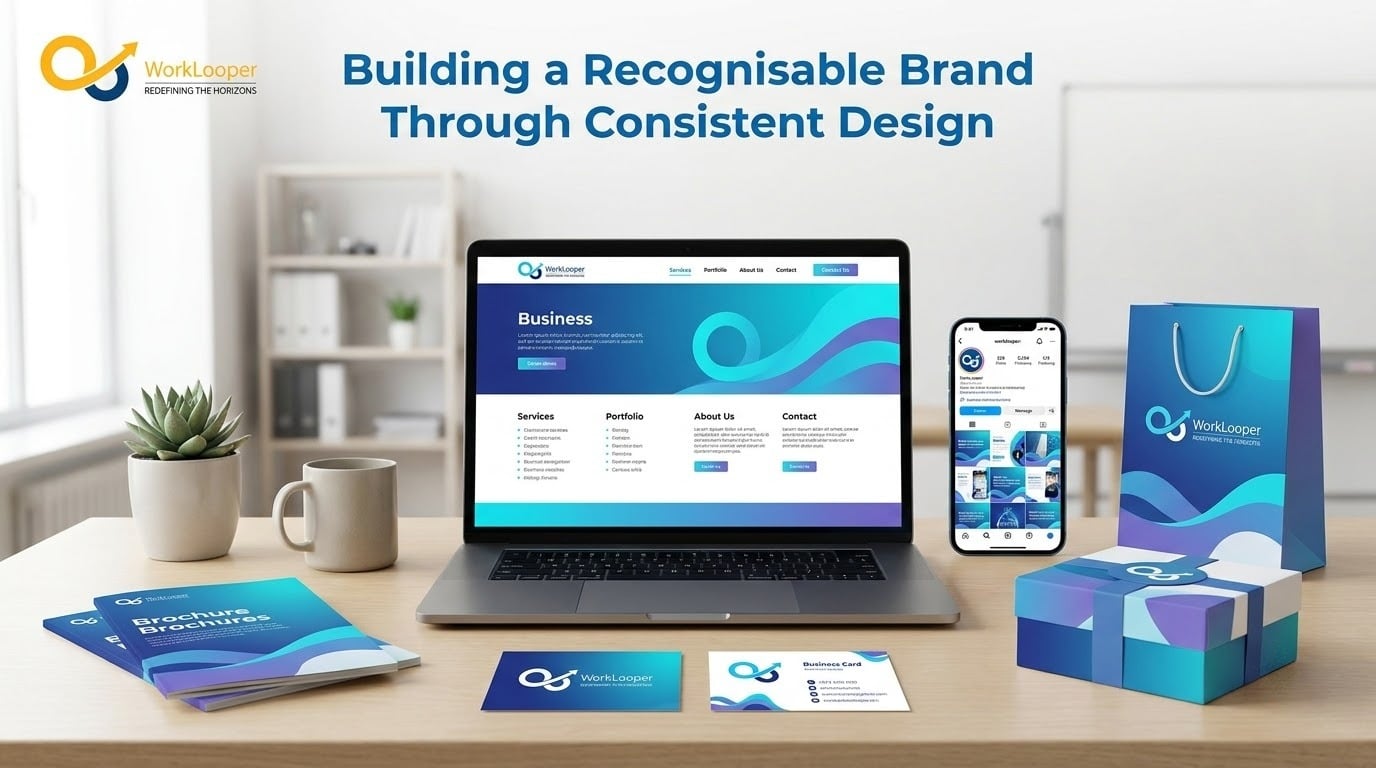
A business might have great products and great services, but a customer also needs a method of identifying it. They might come across a company on a website, a social media site, on their Facebook page, an ad or packaging. If every location looks different, they may not realise they’re coming across a single company.
Consistent design provides a familiar look for your business everywhere. Colours, typefaces, logos, pictures and arrangements work as a unified whole to tell one story. Designs do not have to be precisely the same, but they do need to have common elements that reinforce your brand so that customers will be able to recall you.
What Does Consistent Brand Design Mean?
Consistent brand design is when a business maintains the same core visual identity across all of its communications. These communications could be websites, social media accounts, email newsletters, packaging, brochures, and ads. Why does it matter?
It’s not about matching everything across the whole design. A website banner is not a printed leaflet or a Facebook post, but the key visual decisions should be aligned.
For example, you could have a small selection of a dark blue, a consistent heading font and one approved logo. These can be used in different compositions while still maintaining consistent company recognition. Related image styles and spacing add further consistency.
A visual identity provides teams with a foundation for new projects, making life easier as the business scales.
How Consistent Design Improves Brand Recognition
Why Brand Recognition Is Important: It builds as potential customers become accustomed to the visual identity of a business. When they see the same colours, logo and style of image used across platforms, they associate it with one business.
If you’ve seen an ad from a company you already know, you’ll recognise the company’s colour scheme or branding very quickly before even noticing the name. Repeated use of these images leads to recognition.
Business seems to be neatly organised – consistency. The same design on the website, adverts and associated materials provides the impression of a business-like identity. Design will not make us trust – stable products, quality services and truthful communication are also important.
For growing businesses, a cohesive visual identity puts an end to misunderstandings and creates some commonality in customer engagement strategies on all platforms. It might even add more meaning to marketing materials since they are communicating the same thing. Ultimately, familiar design features can cue customers to recall the business when they require its products or services.
Important Elements of a Consistent Brand Identity
Prior to generating any marketing content, a business has to establish how each design segment will work together to produce a memorable brand.
Choosing the Right Colours and Fonts
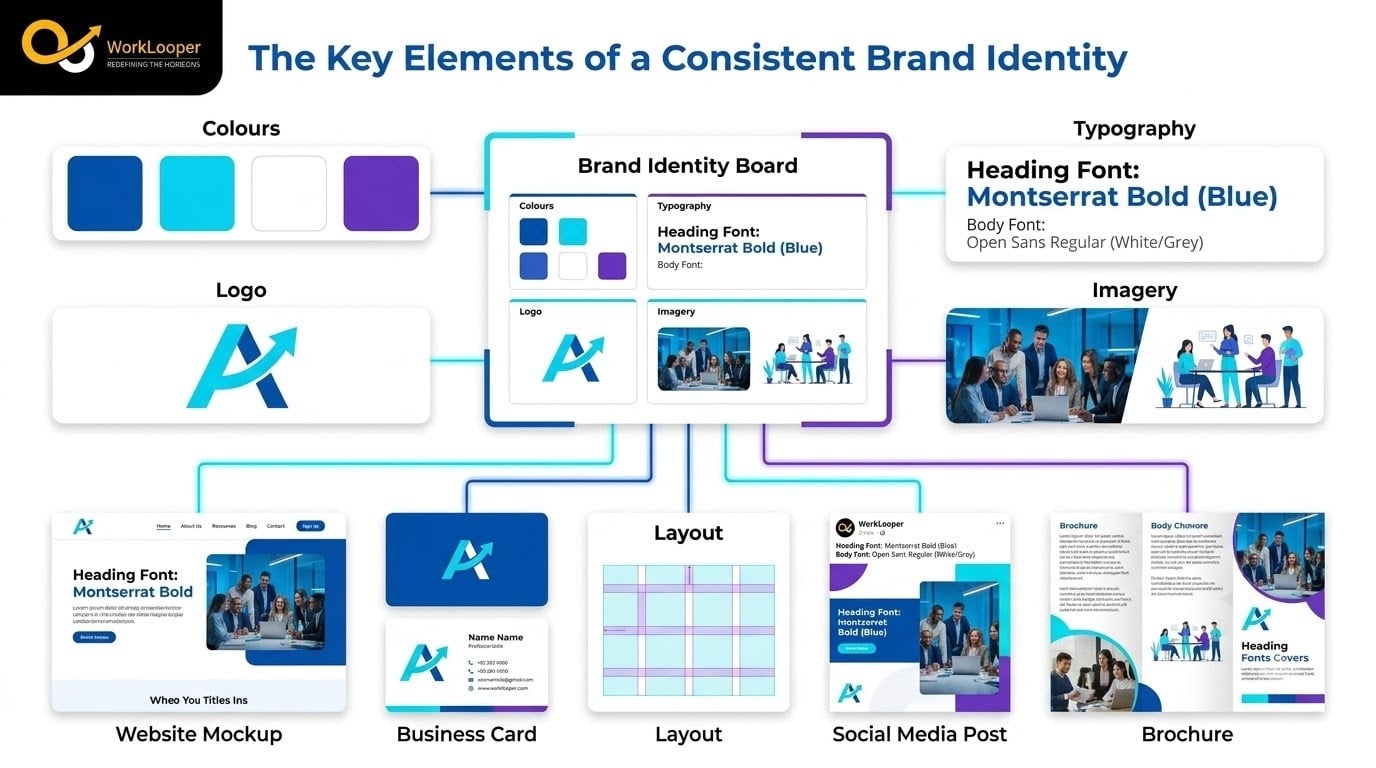
The colour you choose can create a mood, and the font you choose will determine the style of the text, as well as how easy it is for your audience to read. You might want your business to stick to a handful of colours and fonts.
For instance, an organisation whose main colours are blue and white should employ them throughout its website, in presentations, and marketing graphics. Additional colours should be used when appropriate, but they will relate to the standard colour scheme. Fonts should be employed intentionally. For example, one font may be used for headings and another for text.
Using Logos and Images Correctly
Logos are usually one of the most visible elements of a brand and should be used in approved forms only. Never stretch artwork, alter colours or place them in a context where they are hard to see.
Images and illustrations should have a unified feel too. Use pictures with similar lighting, graphics that have a similar style, or similar layout for various materials to tie everything together. What to keep in mind:
- Logo: Maintain the proportions, colours and spacing.
- Colours: Use approved colours on all materials.
- Typography: Select legible fonts and use them systematically.
- Images: Include images consistent with the overall style of the brand.
- Design Format: Maintain clear alignment and comfortable spacing.
Design should fit the business and its customers. A kids’ brand may be bright and colourful, while a professional firm may prefer a simpler look. Every decision should promote the same identity.
Maintaining Visual Consistency Across Different Platforms
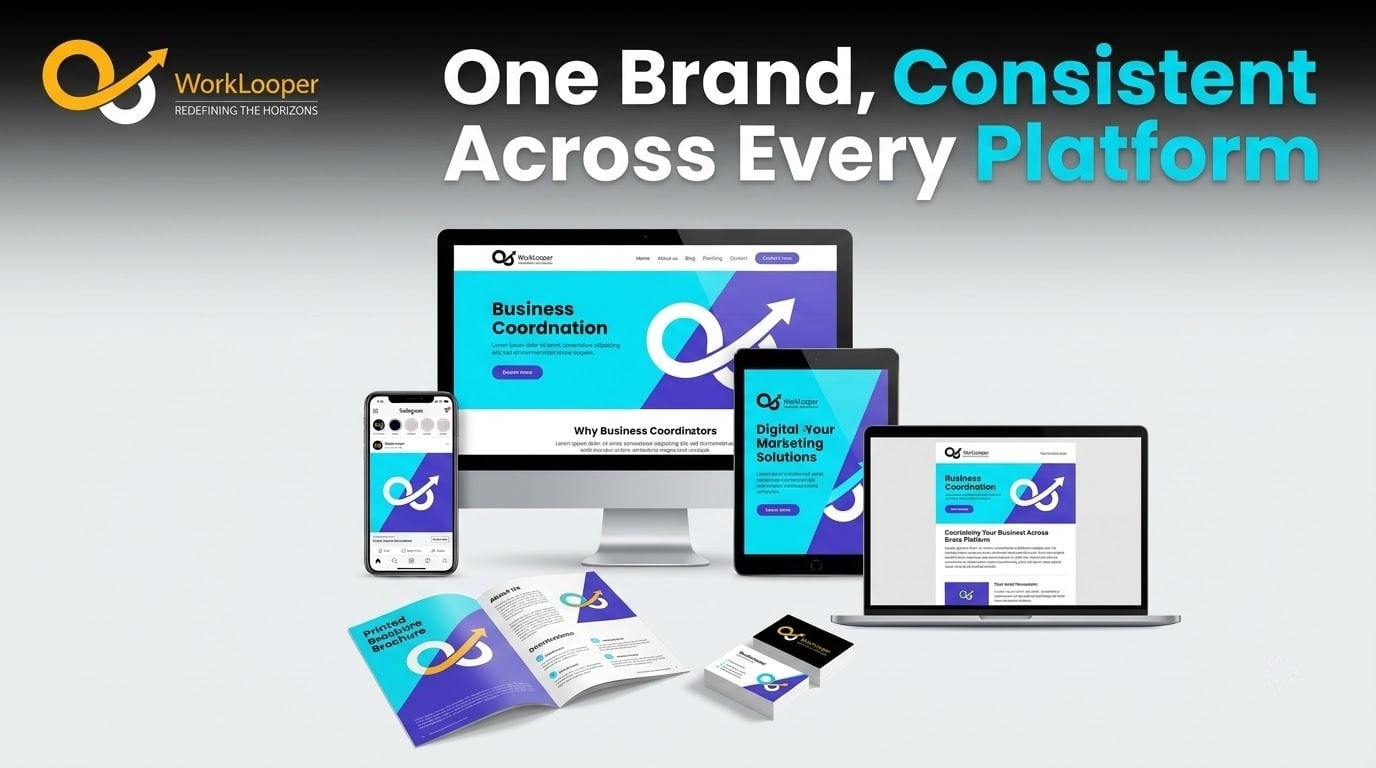
Here are a few different platforms to think about for your branding and the format they need. You may need horizontal banners for your website, square or portrait for your Instagram and another size for print, etc.
Adapting Designs for Different Channels
But a business can edit the entire content to suit the various media of the channel, yet preserve the colours, logo, typeface and visual style. It must remain relevant to the channel, without removing it from the main brand.
Think about readability. A font that is clear on a computer screen can be hard to read on a small screen – so check the size before you decide to use a specific font.
Reusable templates for announcing, promoting, presenting, and social posting will save you hours and provide consistency as you gain experience with your work. Especially useful when you need to create content at a regular pace and multiple team members may be responsible for creating the content. However, a template is just a starting point for your design – it shouldn’t be so prescriptive that you never break the rules.
Businesses need to update out-of-date content and use logos, colours or layouts that need refreshment.
How Brand Guidelines Support Better Design Decisions
Brand guidelines provide an explanation of how a company can make use of its visual identity. They provide a guide for the use of your visual identity to your employees, designers, marketing teams and third-party agencies.
Creating Simple Brand Guidelines
A helpful guidance document can detail the specs for approved logos, colours, fonts, image styles and layout rules. Clear examples of what should and shouldn’t be done make instructions easier to follow.
Keep all approved design documents in one place and up-to-date. Never underestimate the value of scanning a publication for content before publication – you may be able to stop significant mistakes, especially in the case of a lot of co-writing or co-creation of content. Make your style guide easy to find and update. If you have a change of logo or colour palette, teams need to know which files are new and when they were updated.
Let a graphic designer help you get your files in order. Have the pros guide you through creating material to meet various needs but remain recognisable. Standards make it easier to be consistent from day to day.
Practical Ways to Maintain a Cohesive Brand
Basic habits keep regularity simple. Maintain a journal of major visual components and provide accompanying files to all involved with design and marketing.
Check all logos, colours, fonts, graphics and layout before publication. Ensure that all text is readable and that the design is suitable for the target audience.
Regularly check the websites, ads, presentations, and social media templates as the firm progresses. Identify a person to approve significant design changes.
This doesn’t mean that uniformity should take creativity away. Kreativ designers have a lot of options to toy around with in terms of layout, illustrations, and campaigns, as long as they keep the main brand trait intact.
Conclusion
Building and Recognising is built on interconnected touchpoints. Having consistent colours, logos, fonts, images, and layouts means that customers can find your business across many environments and then produce similar materials.
Consistent rules, standard formats, and ongoing reviews support the process. Businesses should tailor designs for each channel while allowing new ideas. When consistency is integrated into design, a company can communicate clearly and build familiarity over time.
About the author
Unleash your creativity with the Top game development company in India - WorkLooper! We offer the latest in game development technology to help you create the perfect gaming experience for your audience. Our experienced team of experts is dedicated to creating a unique, high-quality gaming experience for you and your audience. From concept to design, from testing to support, we'll help you every step of the way. Create an unforgettable gaming experience.
Comments
Join the discussionNo comments yet. Be the first to comment.


